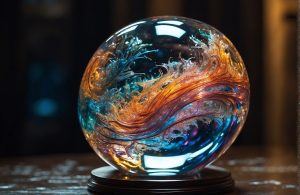
Blown Glass Art
Blown glass art is one of the oldest and most captivating forms of human craftsmanship. The technique involves gathering molten glass on the end of a long metal pipe and blowing air through it to create a bubble. From there, the artist shapes, stretches, and moulds the glass into a finished form — all within a matter of minutes before it cools and hardens. The results can range from delicate ornaments to large-scale sculptures, each one entirely unique.
A brief history of glassblowing
Glassblowing originated in the Syro-Palestinian region around 50 BCE, during the Roman Empire. It quickly spread across the ancient world because it was far faster and more efficient than earlier glass-forming methods. By the Middle Ages, Venice had become the global centre of fine glasswork, with the island of Murano housing its most skilled artisans. The Venetian government took the craft so seriously that glassmakers were forbidden from leaving the island — their knowledge was considered a state secret.
How the process works
The glassblowing process begins in a furnace heated to around 1,100°C. The artist gathers a small amount of molten glass onto a blowpipe, then blows gently to form an initial bubble. They rotate the pipe continuously to prevent the glass from sagging, using tools such as jacks, shears, and wooden blocks to refine the shape. Colour is introduced by rolling the molten glass over powdered metallic oxides — cobalt for blue, copper for green, gold for red. Each decision must be made quickly and confidently; glass waits for no one.
The role of skill and intuition
What separates a competent glassblower from a master is the ability to read the material. Glass behaves differently depending on temperature, humidity, and the speed of movement. Experienced artists develop an almost intuitive understanding of these variables, making micro-adjustments that are impossible to fully teach. Many glassblowers spend years in apprenticeship before attempting complex pieces independently. Even then, breakages and imperfections remain part of the process — accepted not as failures, but as evidence of working with a living, unpredictable medium.
Contemporary blown glass art
The studio glass movement of the 1960s transformed glassblowing from an industrial trade into a recognised fine art form. American artist Dale Chihuly is perhaps the most influential figure in this shift, known for his large-scale installations that fill entire rooms with cascading colour and light. Today, blown glass art spans everything from functional tableware to gallery exhibitions, with artists around the world pushing the boundaries of what the medium can express. The craft has found a particularly enthusiastic audience online, where videos of the glassblowing process itself — all fire, fluid motion, and glowing colour — have attracted millions of viewers.
Why blown glass endures
Few art forms carry the same combination of immediacy and permanence as blown glass. The artist has only minutes to work before the material becomes fixed, yet the finished object can last for centuries. There is something deeply compelling about that tension — the fleeting nature of the making process preserved in a solid, timeless object. Whether displayed on a windowsill to catch the afternoon light or exhibited in a gallery, a piece of blown glass holds the memory of the hands and breath that formed it.
Getting started with glassblowing
For those curious about trying glassblowing firsthand, introductory classes are widely available at glass studios and arts centres across the UK. Most sessions require no prior experience and provide full equipment and supervision. Participants typically leave with a small handmade piece — a paperweight or simple vessel — along with a new appreciation for the skill involved. It is a physically demanding and deeply satisfying craft, and for many, a single session is enough to spark a lasting interest.